Overview
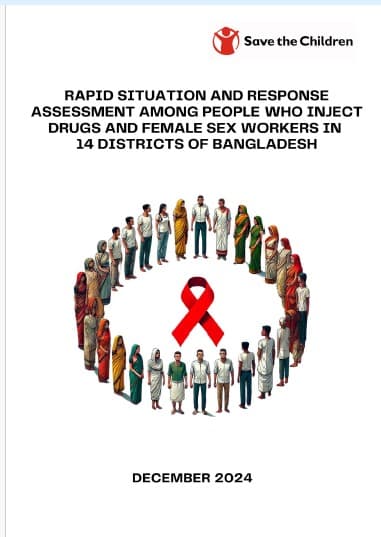
RMCL conducted a large-scale Rapid Situation and Response Assessment (RSRA) among People Who Inject Drugs (PWIDs) and Female Sex Workers (FSWs) across 14 districts of Bangladesh for Save the Children. The assessment generated critical evidence on HIV-related vulnerabilities, risk behaviors, service access, and health-seeking practices among key populations living in socially marginalized and hard-to-reach settings. The study aimed to support evidence-based HIV prevention, harm reduction, and public health programming aligned with Bangladesh’s national HIV response priorities and global public health commitments. The assignment focused on understanding behavioral, structural, and service-related vulnerabilities affecting key populations, while identifying barriers to healthcare access, prevention services, and community-based support systems. RMCL demonstrated strong expertise in conducting complex research among hidden and stigmatized populations through rigorous methodologies, ethical approaches, and specialized field implementation systems. The study incorporated advanced mixed-method approaches, combining quantitative surveys, qualitative assessments, hotspot mapping, document review, and GIS-supported service mapping to generate high-quality and context-sensitive evidence
RMCL provided technical and operational leadership for the assignment, including:
- Rapid assessment design and methodological framework development;
- Hidden population mapping and hotspot identification;
- Development of sensitive and ethical data collection tools;
- Large-scale field implementation across multiple districts;
- Qualitative and quantitative data collection;
- GIS-supported service and hotspot mapping;
- Data management, advanced analytics, and reporting;
- Evidence generation for HIV programming and strategic response planning.
The assessment explored key dimensions including:
- • HIV-related risk behaviors and vulnerabilities;
- Drug use patterns and injecting practices among PWIDs;
- Sexual and reproductive health vulnerabilities among FSWs;
- Access to HIV prevention, testing, treatment, and harm reduction services;
- Service delivery gaps and barriers to healthcare access;
- Violence, stigma, discrimination, and social exclusion;
- Community support systems and institutional response mechanisms.
Specialized Field Implementation & Ethical Safeguarding
Using highly trained research teams and specialized field strategies, RMCL successfully implemented data collection among vulnerable and hard-to-reach populations while maintaining strict ethical standards, confidentiality, safeguarding protocols, and Do No Harm principles. The assignment required advanced skills in community engagement, trust-building, respondent safety, and sensitive interviewing approaches within stigmatized environments. The findings contributed to strengthening evidence-based HIV prevention strategies, harm reduction programming, and public health interventions targeting key populations in Bangladesh. The study provided actionable recommendations for improving service accessibility, strengthening community-based responses, enhancing referral systems, and supporting integrated HIV and public health programming. This assignment demonstrates RMCL’s extensive expertise in hidden population research, HIV and harm reduction studies, public health surveillance, behavioral assessments, and complex field operations among marginalized populations in Bangladesh
Published by RMCL — Research & Management Consultants Ltd.